杨澜访谈录
【“十五五”开局看河北】外贸“量稳质升” 开放型经济活力迸发_我的网站

A |
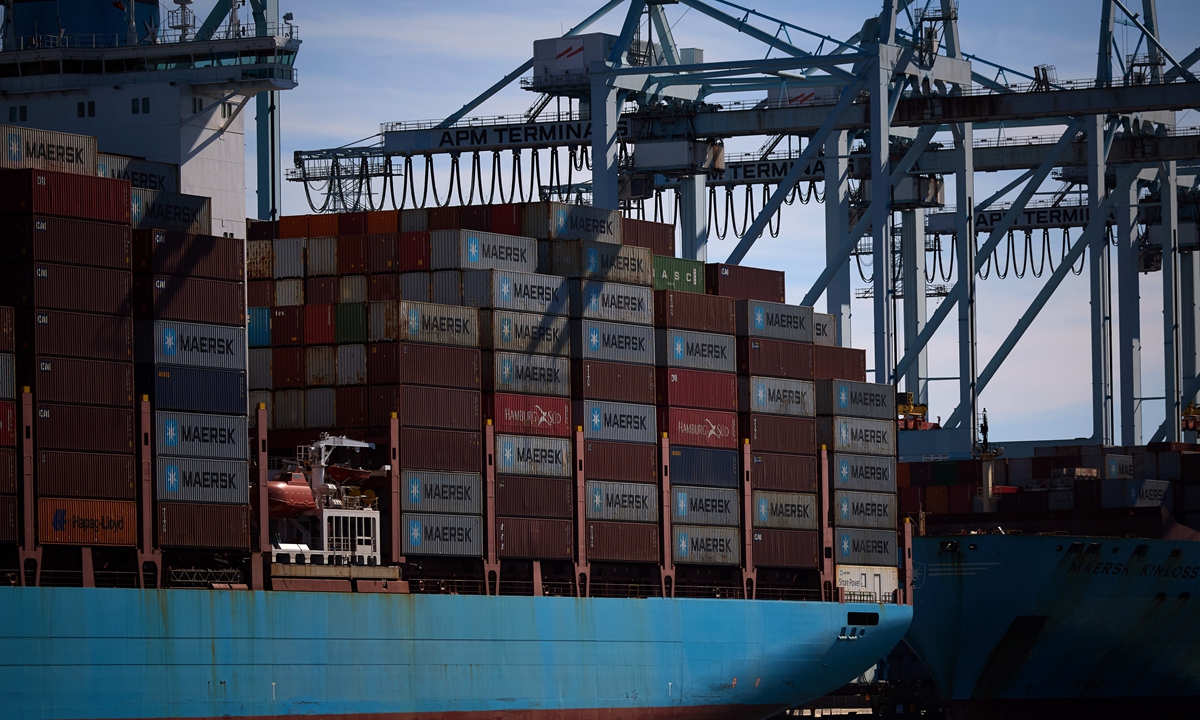
When even major US allies and trading partners are swept into Washington's alleged China-linked transshipment network, is the US still cracking down on its so-called illegal tariff evasion, or is it raising its "small yard, high fence" higher and tighten it further by wielding its tariff stick and extending tariff controls across normal global supply chains?
The White House on Thursday released a report identifying roughly 40 economies as participants in what it calls a "Shadow Transshipment Network", alleging that Chinese goods are being routed through third countries to evade higher US tariffs. The list stretches across Asia, Europe and the Americas and includes some of Washington's closest allies and largest trading partners.
Chinese experts said the report is partly aimed at defending Washington's tariff policy by shifting responsibility for its weakened impact onto other economies, while also pressuring them to follow US trade and origin rules. In effect, the US is trying to extend its unilateral trade restrictions beyond its own borders and deeper into global supply chains, they said.
Build 'higher fence'
The 25-page report claims that US import sourcing saw a "substantial reallocation" after the 2018 tariffs, as China's direct share declined and imports from identified transshipment economies rose. It alleges that some goods were routed through lower-tariff jurisdictions, where minor processing, relabeling, repackaging, re-invoicing or paperwork changes were used to create the appearance of a new national origin.
However, the report itself acknowledges that alleged transshipment risks in several major economies are "embedded within broad legitimate trade flows." It also admitted that the post-2018 shift in US imports "does not establish" that all displaced Chinese trade was illegally transshipped and partly reflected "legitimate changes in production, investment, and sourcing."
False declarations of origin or simple repackaging can amount to tariff circumvention, but investing overseas, building factories abroad or sourcing components across borders are legitimate forms of supply-chain adjustment, experts said.
One purpose of the report is to portray Washington's tariff policy as effective while attributing its diminished impact to the responses of other economies, Zhou Mi, a researcher at the Chinese Academy of International Trade and Economic Cooperation, told the Global Times.
This allows Washington to shift responsibility onto other economies and put itself in a more favorable position in shaping the narrative around its tariff policy, Zhou said.
Cui Fan, a professor at the University of International Business and Economics, told the Global Times that US rules for determining country of origin are not fully aligned with those used by other economies. The latest move could pressure other countries to adopt US standards, but Cui said such an approach is unlikely to work.
"Countries formulate their rules of origin based on a range of factors, including the scale and technological conditions of their own industries," Cui said. "Industrial structures and the global division of labor cannot be reshaped simply through pressure from one country."
Harmonization of rules of origin - applying the same rules across countries regardless of purpose - "would facilitate the flow of international trade," according to WTO on its website.
It has also warned that misuse of such rules may turn them into "a trade policy instrument" rather than merely a device supporting other trade policy measures, according to WTO.
Washington was pursuing hegemonic politics and unilateral bullying in the economic and trade sphere under the guise of "reciprocity", a spokesperson for China's Ministry of Commerce said when commenting on the US use of tariffs to pressure other countries into restricting economic and trade cooperation with China.
Disrupting global supply chains
Cui said production and trade networks linking China with South Korea, Europe and other economies have taken shape over years of market-driven specialization. By lowering production and logistics costs and improving efficiency, these networks have benefited businesses and consumers across participating economies.
"The real challenge facing global trade today is not so-called illegal transshipment, but the continued damage that unilateralism and trade protectionism are inflicting on the multilateral trading system," Cui added.
Since returning to office, the Trump administration has made tariffs a centerpiece of its trade policy, rolling out sweeping "reciprocal tariffs" and other broad duties that have drawn widespread criticism at home and abroad. On Thursday, Washington announced new Section 232 tariffs on drones and their parts and components, further expanding the range of products subject to US tariffs.
US tariffs have themselves pushed companies to reconfigure supply chains. Washington is now citing those very adjustments as evidence of circumvention, effectively using the market fallout from its own tariff policy to justify further trade restrictions, Chinese experts noted.
International trade is based on mutual benefit, and sovereign countries have the legitimate right to conduct economic and trade cooperation independently, Cui said. "No country should interfere with normal global trade simply to advance its own unilateral interests."
The report broadens its scrutiny beyond routing and documentation to include China-origin inputs or components, Chinese ownership or financing, relationships with Chinese suppliers or manufacturers, China-based production steps and China-origin routing histories.
Analysts believed the latest move is more than simply making the existing "high fence" higher. By trying to bring more economies and a larger portion of global supply chains within the reach of US tariff enforcement, Washington attempted to make the "yard" itself much bigger.
Cui warned that sustained US pressure to reshape normal trade and supply-chain links could fragment mature regional production networks, and reduce the efficiency of global resource allocation, with the impact extending far beyond China-US trade given the wide range of economies named in the report.
Zhou noted that companies would be forced to redesign supply chains to manage rising policy risks, adding costs that could feed back into the US through higher inflation while creating broader frictions and instability for global trade.
。

B | 冀时新闻报道 外贸是拉动经济增长的重要引擎。今年上半年,全省实现外贸进出口总值3860.3亿元,创历史同期新高,同比增长33.2%,高于全国平均增速16.3个百分点,增速位居全国第四。《"十五五"开局看》,今天关注省外贸"量稳质升"背后的发展动力。在远景动力沧州基地的成品仓库外,一箱箱电池正装柜待发,下午就要装船出海。远景动力沧州基地制造运营总监 徐杰:在我身后这批货是用在新能源汽车上的动力电池,要马上装船出海,目前我们客户出货及客户订单都在稳定上涨。远景动力沧州工厂2024年投产以来,首批动力电池产品就直接发往了欧洲,创下了业内少见的"量产即出口"。今年上半年,基地出口额同比增长了1300%。爆发式增长的背后,秘诀是什么?沧东经济开发区管理委员会 远景动力项目专班工作人员 吴秋芳:我们是亲眼看着这个项目从一片空地一步步走到今天投产的,最大的感受就是,这家企业的发展逻辑很清晰,总是提前布局、抢跑一步。就拿储能电芯来说吧,当整个行业还在300+安时这个赛道上激烈拼杀的时候,远景动力700+安时的产品已经在我们远景动力沧州工厂实现了大规模量产。今年6月,远景动力46系列大圆柱电池在沧州基地规模化量产,将配套宝马汽车纯电平台。

C | 企业抢跑一步,地方服务也跟进一步。远景动力的海外客户对碳排放要求越来越高,沧东经济开发区的条件正好对上了这个需求。沧东经济开发区管理委员会 远景动力项目专班负责人 王鲲程:我们沧东经济开发区是国家级零碳园区,搞的就是"风光氢氨储充放"六位一体的能源模式,让企业生产的每一块电池,它们的碳足迹都可以被追溯。远景动力沧州基地的快速发展,是"新三样"加速出海的一个缩影。

D | 今年上半年,以电动汽车、锂离子蓄电池、光伏产品为代表的"新三样"合计出口166.4亿元,同比增长31.3%。其中锂离子蓄电池出口21.2亿元,同比增长3.7倍。

E | 与此同时,风力发电机组及其零件出口增长141.6%,工业机器人出口增长541.7%。

F | 产品加速"走出去",物流通道也同步拓宽。在石家庄国际陆港,上半年共开行国际班列814列,同比增长42.06%,开行规模稳居华北首位。省国际陆港有限公司班列运营部副经理 李江娜:运输货值是71.16亿元,超8万标箱的货物是从这里奔赴亚欧各地,开行规模是稳居全国前列。利用回程班列满足咱们本地的产业需求,持续运回咱们的饲用小麦粉、聚丙烯等大宗的原料,今年上半年,中欧(亚)回程班列累计进口(货物)78万吨,合计是30.4亿元。通道在拓展,外贸的"朋友圈"也在扩大。上半年,东盟跃升为第一大贸易伙伴,进出口433.6亿元,同比增长38.3%。

G | 对非洲进出口484.3亿元,增长88.3%。对共建"一带一路"国家进出口2518.8亿元,占全省进出口总值的65.3%。全省已有超9000家工业企业开展工业品直播,实现所有县(市、区)全覆盖,"工业品直播+跨境电商"的模式正在帮助更多中小企业打开海外市场。石家庄海关统计分析处副处长 李巍巍:省以"冀货出海拓市场"行动为抓手,深度拓展了共建"一带一路"国家、东南亚、非洲等市场,有效缓解了对传统市场的依赖。

H | 随着全省经济结构持续拓展升级,上半年,进口首次突破1500亿元,有力推动了全省外贸向更加平衡的方向发展。
Current article:http://djeyb.nenyaogecebenliexi.shop/1qi7580/r36.html
Published on:22:53:53